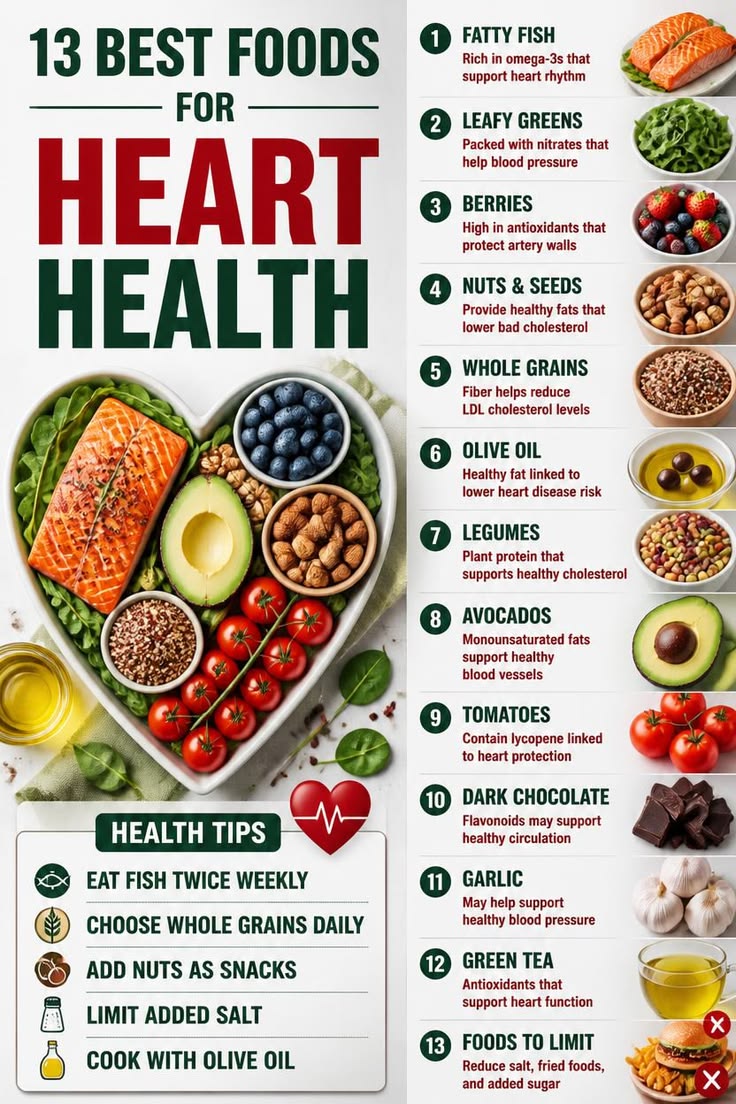
Your heart works continuously to pump blood throughout your body, making cardiovascular health essential for a long and active life. While regular exercise, adequate sleep, and stress management contribute to heart health, the foods you eat also play an important role.
Choosing the best foods for heart health can help manage cholesterol levels, support healthy blood pressure, reduce cardiovascular risk factors, and provide essential nutrients your body needs.
Fortunately, eating for a healthy heart does not require expensive supplements or complicated meal plans. Everyday foods such as oatmeal, leafy greens, berries, nuts, beans, and fish can form the foundation of a balanced diet.

This guide explores 15 heart-healthy foods, explains their nutritional benefits, and provides practical tips for incorporating them into your daily meals.
Quick Answer: What Are the Best Foods for Heart Health?
The best foods for heart health include fatty fish, oatmeal, leafy green vegetables, berries, walnuts, almonds, olive oil, avocados, beans, lentils, whole grains, tomatoes, flaxseeds, chia seeds, and plain low-fat yogurt.
These foods provide beneficial nutrients such as omega-3 fatty acids, soluble fiber, potassium, magnesium, antioxidants, and unsaturated fats. Eating them regularly as part of a balanced dietary pattern can support healthy cholesterol, blood pressure, and overall cardiovascular function.
Best Foods for Heart Health at a Glance
| Food | Important Nutrients | Potential Heart Benefits |
|---|---|---|
| Salmon | Omega-3 fatty acids | Supports cardiovascular health |
| Oatmeal | Soluble fiber | Helps lower LDL cholesterol |
| Spinach | Potassium, folate | Supports blood pressure regulation |
| Blueberries | Fiber, anthocyanins | Supports vascular health |
| Walnuts | Unsaturated fats, ALA | Supports healthy cholesterol |
| Almonds | Vitamin E, fiber | Supports cardiovascular health |
| Olive oil | Monounsaturated fats | Helps replace saturated fats |
| Avocados | Fiber, potassium | Supports cholesterol and blood pressure management |
| Beans | Fiber, plant protein | Helps improve cholesterol levels |
| Lentils | Fiber, potassium | Supports heart-healthy eating |
| Whole grains | Fiber, minerals | Supports healthy cholesterol |
| Tomatoes | Lycopene, potassium | Contributes to a nutritious dietary pattern |
| Flaxseeds | ALA, fiber | Supports cholesterol management |
| Chia seeds | Fiber, ALA | Provides heart-supporting nutrients |
| Plain low-fat yogurt | Calcium, protein | Fits a blood-pressure-friendly diet |
15 Best Foods for Heart Health
1. Salmon and Other Fatty Fish
Salmon is one of the most beneficial foods to include in a heart-healthy diet because it contains omega-3 fatty acids, particularly EPA and DHA.
These fats play important roles in cardiovascular function and can help lower elevated triglyceride levels.
Other excellent sources include sardines, trout, herring, and Atlantic mackerel.
Heart health benefits:
- Provides beneficial omega-3 fatty acids.
- Supports normal cardiovascular function.
- May help reduce elevated triglycerides.
- Offers high-quality protein.
How to eat it: Choose grilled, baked, or steamed fish instead of deep-fried varieties. Aim to include fish, especially oily fish, about twice per week.
2. Oatmeal
Oatmeal is a nutritious breakfast choice for individuals looking to support healthy cholesterol levels.
Oats contain beta-glucan, a type of soluble fiber that helps reduce the absorption of cholesterol in the digestive system.
Regular consumption of oats as part of a diet low in saturated fat may help lower LDL cholesterol, often called bad cholesterol.
Heart health benefits:
- Provides cholesterol-lowering soluble fiber.
- Helps support digestive health.
- Promotes fullness after meals.
- Offers minerals such as magnesium.
How to eat it: Prepare plain oatmeal with unsweetened milk or water. Add berries, walnuts, or cinnamon instead of large amounts of sugar.
3. Leafy Green Vegetables
Leafy green vegetables such as spinach, kale, collard greens, and Swiss chard are nutrient-dense foods that contribute to cardiovascular health.
They contain potassium, magnesium, folate, fiber, and naturally occurring dietary nitrates.
Potassium is especially important because it helps regulate fluid balance and supports healthy blood pressure.
Heart health benefits:
- Supplies important vitamins and minerals.
- Supports healthy blood pressure.
- Provides antioxidants.
- Contributes to overall cardiovascular nutrition.
How to eat them: Add spinach to omelets, include leafy greens in salads, or prepare cooked vegetables with a small amount of olive oil.
4. Blueberries and Other Berries
Blueberries, strawberries, raspberries, and blackberries are excellent additions to a heart-healthy eating plan.
These fruits contain fiber, vitamin C, and plant compounds called polyphenols.
Blueberries and other deeply colored berries are particularly rich in anthocyanins, which have been studied for their potential effects on blood vessel function.
Heart health benefits:
- Provides antioxidant compounds.
- Supplies dietary fiber.
- Supports a nutrient-rich eating pattern.
- Offers a naturally sweet alternative to sugary desserts.
How to eat them: Add berries to yogurt, oatmeal, or smoothies without added sugar. Fresh and unsweetened frozen berries are both suitable choices.
5. Walnuts
Walnuts contain polyunsaturated fats, fiber, and plant-based omega-3 fatty acids.
Their omega-3 content comes primarily from alpha-linolenic acid (ALA), which differs from the EPA and DHA found in fatty fish.
When walnuts replace foods high in saturated fat, they can contribute to healthier cholesterol levels.
Heart health benefits:
- Provides beneficial unsaturated fats.
- Supports healthy cholesterol management.
- Supplies plant protein and fiber.
- Contains antioxidants and minerals.
How to eat them: Enjoy a small handful of unsalted walnuts as a snack or add chopped walnuts to salads and oatmeal.
6. Almonds
Almonds are rich in monounsaturated fats, vitamin E, magnesium, fiber, and plant protein.
Eating almonds instead of less nutritious snacks can support cardiovascular health.
Because almonds are calorie-dense, portion size matters, especially for individuals managing their weight.
Heart health benefits:
- Supports healthy cholesterol levels when replacing saturated-fat-rich snacks.
- Provides vitamin E and magnesium.
- Supplies fiber and protein.
- Helps make snacks more filling.
How to eat them: Choose unsalted almonds and enjoy a small handful with fruit, or sprinkle sliced almonds over plain yogurt.
7. Extra Virgin Olive Oil
Extra virgin olive oil is a major component of the Mediterranean dietary pattern, which is associated with better cardiovascular outcomes.
It contains monounsaturated fats and plant compounds called polyphenols.
Replacing butter, ghee, and other foods rich in saturated fat with olive oil can help improve the overall fat quality of your diet.
Heart health benefits:
- Provides beneficial monounsaturated fats.
- Helps reduce saturated fat intake when used as a replacement.
- Contains antioxidant plant compounds.
- Fits Mediterranean-style heart-healthy meals.
How to eat it: Use moderate amounts of olive oil for salad dressings, sautéing vegetables, and preparing meals.
8. Avocados
Avocados are rich in monounsaturated fats, fiber, potassium, and folate.
They can be a nutritious replacement for foods containing high amounts of saturated fat, such as certain creamy spreads.
Their potassium content also contributes to healthy blood pressure regulation.
Heart health benefits:
- Supplies beneficial unsaturated fats.
- Provides dietary fiber.
- Contains potassium and folate.
- Supports a balanced dietary pattern.
How to eat them: Add avocado slices to whole-grain toast, salads, or sandwiches. Use mashed avocado as a spread instead of butter.
9. Beans
Beans are among the most affordable foods for supporting heart health.
Kidney beans, black beans, chickpeas, and other legumes contain soluble fiber, plant protein, potassium, and magnesium.
Replacing some processed or fatty meats with beans can reduce saturated fat intake while increasing dietary fiber.
Heart health benefits:
- Helps support healthy cholesterol levels.
- Provides plant-based protein.
- Supplies fiber and essential minerals.
- Makes filling, nutrient-dense meals.
How to eat them: Add beans to soups, salads, vegetable curries, or rice dishes. Choose no-added-salt canned beans when available.
10. Lentils
Lentils are another excellent source of plant protein and fiber.
They provide folate, potassium, iron, and other nutrients that contribute to a balanced diet.
Their versatility makes them particularly useful for creating affordable, heart-friendly meals.
Heart health benefits:
- Provides soluble and insoluble fiber.
- Supports healthy cholesterol management.
- Supplies potassium and folate.
- Offers a nutritious alternative to fatty meats.
How to eat them: Prepare lentil soup, daal, or lentil salads using vegetables, herbs, and moderate amounts of unsaturated oil. Limit added salt and excessive ghee.
11. Whole Grains
Whole grains such as brown rice, barley, quinoa, whole wheat, and oats contain more fiber and nutrients than many refined grain products.
Eating whole grains regularly is associated with better cardiovascular health.
Their fiber content can help improve cholesterol management, while their complex carbohydrates provide energy.
Heart health benefits:
- Supports healthy cholesterol levels.
- Provides dietary fiber.
- Supplies vitamins and minerals.
- Helps create satisfying meals.
How to eat them: Replace some white bread, refined flour products, or white rice with whole-grain alternatives.
12. Tomatoes
Tomatoes provide vitamin C, potassium, fiber, and lycopene.
Lycopene is a carotenoid antioxidant that has been studied for potential cardiovascular benefits.
However, tomatoes should be considered part of an overall healthy dietary pattern rather than a treatment for high cholesterol or heart disease.
Heart health benefits:
- Provides potassium and vitamin C.
- Contains the antioxidant lycopene.
- Helps increase vegetable intake.
- Adds flavor without requiring excess salt.
How to eat them: Include fresh tomatoes in salads or prepare homemade tomato sauces with olive oil, garlic, and herbs. Choose lower-sodium canned tomato products.
13. Flaxseeds
Flaxseeds contain fiber, lignans, and the plant omega-3 fatty acid ALA.
Ground flaxseed is generally easier for the body to digest than whole flaxseed.
Research suggests flaxseed consumption may provide modest benefits for certain cardiovascular risk factors, including cholesterol and blood pressure.
Heart health benefits:
- Provides soluble and insoluble fiber.
- Supplies plant-based omega-3 fats.
- Contains beneficial plant compounds.
- May support cholesterol management.
How to eat them: Add ground flaxseed to oatmeal, yogurt, or smoothies. Start with small amounts and drink sufficient water.
14. Chia Seeds
Chia seeds are another useful source of plant-based omega-3 fats and dietary fiber.
They also contain magnesium, calcium, and other minerals.
Although chia seeds are nutritious, evidence does not establish that eating them alone prevents heart attacks or treats cardiovascular disease.
Heart health benefits:
- Provides fiber and ALA omega-3 fats.
- Supplies magnesium and calcium.
- Supports overall dietary quality.
- Can help make meals more satisfying.
How to eat them: Mix chia seeds into yogurt, overnight oats, or liquids and allow them to hydrate before eating.
15. Plain Low-Fat Yogurt
Plain low-fat yogurt provides protein, calcium, and potassium.
These nutrients fit well within the DASH eating pattern, which emphasizes foods that support healthy blood pressure.
Choosing plain varieties can also help limit added sugar.
Heart health benefits:
- Provides calcium and protein.
- Supplies potassium.
- Supports balanced nutrition.
- Offers a substitute for some higher-saturated-fat foods.
How to eat it: Enjoy plain low-fat yogurt with fresh fruit, oats, or nuts. Avoid varieties containing large amounts of added sugar.
What Makes a Food Good for Heart Health?
Heart-healthy foods generally provide nutrients that support cardiovascular function while helping limit dietary factors associated with heart disease.
| Nutrient | Role in Heart Health | Common Food Sources |
|---|---|---|
| Omega-3 fatty acids | Support cardiovascular function and triglyceride management | Salmon, sardines, walnuts |
| Soluble fiber | Helps reduce LDL cholesterol | Oats, beans, barley |
| Potassium | Supports healthy blood pressure | Spinach, beans, avocados |
| Magnesium | Contributes to normal muscle and vascular function | Nuts, seeds, leafy greens |
| Unsaturated fats | Improve dietary fat quality when replacing saturated fats | Olive oil, nuts, avocados |
| Polyphenols | May support blood vessel health | Berries, olive oil, vegetables |
| Calcium | Supports normal muscle function and blood pressure regulation | Low-fat yogurt, milk |
Rather than concentrating on a single nutrient, the goal should be to eat a variety of minimally processed foods that supply these nutrients together.
Best Fruits for Heart Health
Fruits provide fiber, water, vitamins, minerals, and beneficial plant compounds.
Some especially useful choices include apples, oranges, berries, pears, bananas, and grapes.
Whole fruits are usually preferable to fruit juice because they retain more fiber and are generally more filling.
For example, an apple with its skin provides fiber, while a glass of filtered apple juice contains very little.
Eating a variety of fruits also helps reduce reliance on desserts containing large amounts of added sugar.
Best Vegetables for Heart Health
Vegetables are foundational to a cardiovascular-friendly eating pattern.
Particularly nutritious choices include leafy greens, broccoli, carrots, tomatoes, beets, cabbage, and bell peppers.
Different vegetables offer different nutrients, so variety matters more than identifying one perfect vegetable.
Fresh, frozen, and canned vegetables can all be nutritious. When using canned products, select lower-sodium versions whenever possible.
For practical meal planning, try filling approximately half your plate with vegetables and fruit.
Best Foods for Lowering Cholesterol
High LDL cholesterol increases the risk of cardiovascular disease because it contributes to plaque buildup in arteries.
Certain foods can help improve cholesterol levels, especially when they replace foods high in saturated fat.
Some of the most useful options are:
- Oats and barley: Their beta-glucan soluble fiber helps lower LDL cholesterol.
- Beans and lentils: Their fiber supports cholesterol management.
- Walnuts and almonds: Their unsaturated fats can improve the dietary fat profile.
- Olive oil: Helps replace saturated fats from butter and similar products.
- Avocados: Provide fiber and monounsaturated fats.
Dietary changes can improve cholesterol, but some people also need prescribed medication based on their cardiovascular risk.
Best Foods for Healthy Blood Pressure
High blood pressure places additional strain on the heart and blood vessels.
The DASH dietary pattern emphasizes foods containing potassium, calcium, magnesium, and fiber while limiting sodium.
Useful foods include leafy greens, beans, lentils, bananas, plain low-fat yogurt, whole grains, and unsalted nuts.
Reducing sodium is particularly important. The DASH plan uses a limit of 2,300 milligrams of sodium per day, with 1,500 milligrams offering additional blood pressure benefits for many adults.
People with kidney disease or those taking medications that affect potassium levels should consult their healthcare professional before substantially increasing potassium-rich foods or using potassium-based salt substitutes.
Foods to Limit for Better Heart Health
Eating more nutritious foods is beneficial, but reducing less healthy dietary choices is equally important.
| Food or Beverage | Why It Should Be Limited | Healthier Alternative |
|---|---|---|
| Processed meats | Often high in sodium and saturated fat | Fish, beans, lentils |
| Sugary drinks | Provide large amounts of added sugar | Water, unsweetened tea |
| Deep-fried foods | Often calorie-dense and high in less desirable fats | Baked or grilled foods |
| Salty packaged snacks | Can contribute excess sodium | Unsalted nuts, fruit |
| Butter and excessive ghee | High in saturated fat | Olive or canola oil |
| Sugary breakfast cereals | May contain substantial added sugar | Plain oatmeal |
| High-sodium instant meals | Often contain large amounts of salt | Home-prepared meals |
| Fatty cuts of meat | May contribute excess saturated fat | Skinless poultry, fish, legumes |
You do not have to eliminate every favorite food. The most important factor is the overall quality and consistency of your eating habits.
7-Day Heart-Healthy Meal Plan
This sample plan shows how to combine heart-healthy foods into balanced everyday meals.
| Day | Breakfast | Lunch | Dinner |
|---|---|---|---|
| Monday | Oatmeal with berries and walnuts | Chickpea salad with whole-grain bread | Grilled salmon with brown rice and vegetables |
| Tuesday | Plain yogurt with fruit and chia seeds | Lentil soup and whole-grain roti | Grilled chicken with spinach and quinoa |
| Wednesday | Whole-grain toast with avocado | Bean and vegetable bowl | Baked trout with roasted vegetables |
| Thursday | Oatmeal with banana and almonds | Vegetable and lentil daal with whole-grain roti | Chickpea curry with brown rice |
| Friday | Plain yogurt with berries | Whole-grain vegetable sandwich with hummus | Grilled fish with steamed broccoli |
| Saturday | Whole-grain toast with egg and tomato | Bean salad with olive oil dressing | Lentil and vegetable stew |
| Sunday | Overnight oats with flaxseeds | Quinoa salad with chickpeas | Baked chicken or tofu with mixed vegetables |
This is an illustrative plan, not a personalized prescription. Portion sizes, snacks, and calorie needs depend on age, activity level, body size, health conditions, and individual nutritional requirements.
How to Build a Heart-Healthy Plate
A simple plate-building guide: half vegetables and fruit, one-quarter whole grains, and one-quarter healthy protein.
One practical approach is to fill half your plate with vegetables and fruit, one-quarter with whole grains, and the remaining quarter with healthy protein sources.
Include small portions of unsaturated fats, such as olive oil, seeds, or nuts, and choose water or unsweetened beverages.
This approach helps create balanced meals without requiring complicated dietary rules.
Simple Tips to Improve Heart Health Through Diet
Developing heart-friendly eating habits is often easier when you make gradual changes.
Start by replacing refined grains with whole grains, adding vegetables to daily meals, and choosing beans or lentils more often.
Use unsaturated plant oils instead of relying heavily on butter or ghee. Choose unsalted nuts over salty packaged snacks, and replace sugary beverages with water.
Cooking methods also matter. Baking, steaming, grilling, and sautéing with modest amounts of oil can help reduce unnecessary saturated fat and calories.
Read food labels, particularly for sodium, saturated fat, and added sugars. Many packaged foods contain substantial sodium even when they do not taste particularly salty.
Consistency matters more than occasional perfection.
Frequently Asked Questions
What Is the Number One Best Food for Heart Health?
There is no single best food for heart health. Fatty fish, oats, vegetables, fruits, legumes, nuts, and olive oil all provide different benefits. A varied, balanced dietary pattern is more effective than relying on one food.
Which Fruit Is Best for the Heart?
Berries, apples, oranges, and other whole fruits are excellent choices. Berries contain beneficial polyphenols, while many fruits provide fiber and potassium.
Are Eggs Good for Heart Health?
Eggs can fit into a balanced heart-healthy diet. Their suitability depends on overall dietary habits, individual cholesterol levels, and health conditions. Preparation methods and foods eaten alongside eggs also matter.
What Is the Best Breakfast for Heart Health?
Plain oatmeal topped with berries and unsalted nuts is an excellent option. It provides soluble fiber, beneficial fats, and important nutrients without requiring excessive added sugar.
Is Rice Good for Heart Health?
Rice can be part of a balanced diet. Brown rice provides more fiber than white rice, making it a useful whole-grain choice. Overall meal composition and portion size are also important.
Are Bananas Good for Heart Health?
Bananas provide potassium and fiber, both of which contribute to a nutritious dietary pattern. However, people with certain kidney conditions may need to monitor potassium intake.
Can Heart-Healthy Foods Prevent Heart Attacks?
A nutritious diet can lower cardiovascular risk, but no food or diet guarantees prevention of a heart attack. Blood pressure, cholesterol, smoking, physical activity, diabetes, genetics, and other factors also affect risk.
How Long Does It Take for a Heart-Healthy Diet to Work?
Some improvements in blood pressure or cholesterol may occur within weeks of sustained dietary changes. Long-term cardiovascular benefits depend on consistent habits and individual health factors.
Is the Mediterranean Diet Good for Heart Health?
Yes. The Mediterranean dietary pattern emphasizes vegetables, fruits, legumes, whole grains, nuts, olive oil, and fish while limiting highly processed foods and excess saturated fat. It is widely supported as a heart-healthy eating approach.
Should People With Heart Disease Follow a Special Diet?
People with diagnosed cardiovascular conditions may need individualized guidance on sodium, saturated fat, calories, fluids, or other nutrients. A registered dietitian or healthcare professional can help tailor an eating plan to their medical needs and medications.
Conclusion
The best foods for heart health are nutritious, widely available, and easy to incorporate into everyday meals. Fatty fish, oatmeal, leafy greens, berries, nuts, olive oil, beans, lentils, and whole grains all contribute valuable nutrients that support cardiovascular function.
Rather than focusing on one superfood, prioritize a balanced eating pattern built around vegetables, fruits, fiber-rich grains, healthy proteins, and unsaturated fats.
Limiting excessive sodium, added sugars, processed meats, and saturated fats can further improve dietary quality.
Combined with regular physical activity, adequate sleep, avoiding tobacco, and appropriate medical care, these eating habits can help protect your heart and support long-term well-being.