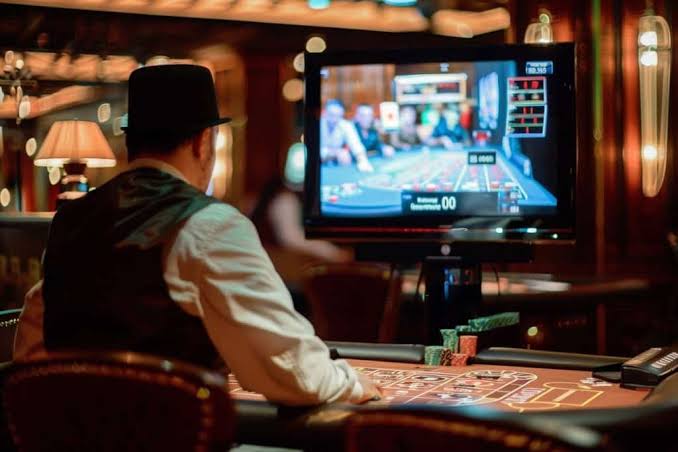
On the face of it, a live dealer game is about as simple as online gaming gets. There’s a real person at a real table with real cards or a real wheel, and you tap a button to bet. But the setup behind that stream is a lot closer to an esports broadcast than to the casino floor you might picture.
Think about what has to happen in a few seconds. Every hand gets filmed, read by software, converted into data and pushed out to players on all sorts of devices. Anyone who’s sat through a big tournament stream on Twitch will recognise a lot of it. So let’s go through it piece by piece, starting in the studio.
Inside a live dealer studio
Most tables are run out of purpose-built studios, though a few are filmed on the floor of a land-based casino. You’ll rarely find just one camera. There’s usually a wide shot of the table and a tight shot of the dealer’s hands, plus another pointed at the card shoe or the wheel. The lighting is fussier than you’d expect too. It isn’t there to make the room look nice. The cameras have to pick out tiny details like a card’s suit or a pocket number, and bad lighting makes that harder. Cutting between those angles works a bit like an esports production, where the director jumps from player cams to the main feed so viewers never lose track of what’s going on.



The dealer is just the face of it. Off camera there are technicians, camera operators and supervisors keeping an eye on every game. If you want to say something to the dealer you’ll normally type it into the chat box, and they’ll read it and answer out loud.
OCR and the game control unit
This is the bit most players never think about. A live game only works online if the software knows exactly what happened at the table, and that job usually falls to optical character recognition, or OCR. At a typical live blackjack table in a UK casino lobby the cameras pick up each card as it’s turned over and the software reads its rank and suit. Your screen updates a moment later. Roulette numbers and dice get tracked too, sometimes by OCR and sometimes by sensors built into the equipment itself.
Each table also has its own game control unit, or GCU. It’s a small piece of hardware that encodes the video and passes data between the table and the players. Without it the stream and the betting screen could easily drift out of sync.
Roulette gets an extra safety net. Some professional wheels come with sensors built right into them. TCS John Huxley’s Saturn wheel has three of them tucked into the rim, and they detect the winning number and log each result. So a table using one isn’t relying on the camera alone. The wheel’s data logger will even flag readings that don’t agree, which means a disputed spin can be looked into properly.
Streaming, latency and the esports connection
Once the GCU has done its job, the feed still has to reach you, whether you’re on a gaming PC with fibre or a phone with two bars of signal on a train. Live platforms handle this with adaptive bitrate streaming. When your connection drops, the stream switches to a lower quality version, so you get a softer picture and far less buffering. It’s not a perfect fix, but it makes a big difference.
Delay is the bigger problem. Bets close on a countdown, so a stream running well behind the studio would make the game unplayable. Streamers deal with the same headache, which is why Twitch offers a low-latency mode built for near real-time chat with viewers. VTubers like Ironmouse have it even trickier, since their animated avatar has to track their face and voice live while they talk to chat. Live dealer platforms face their own version of this, because the video and the betting screen have to stay in step for every player at the table.
How fairness is regulated
Live dealer games offered by licensed operators in Great Britain have to meet the Gambling Commission’s remote gambling and software technical standards. There’s a section just for live dealer studios, called RTS 17, and its core requirement is that these games are fair and can be independently audited. The guidance goes into detail. Equipment should be commercial casino quality and croupiers should be trained to documented procedures. On top of that, all dealer activity should be supervised and filmed clearly enough to show whether the rules were followed.
Studios and kit are also meant to be locked down so only authorised staff can get to them, and game logs should be kept and analysed for trends. The aim is that every shuffle and every spin is watched, recorded and open to review. That’s a big reason people feel comfortable trusting a game they can only ever see through a screen.
What’s next for live dealer tech
The most obvious change so far is how live and digital elements have been mixed together. Lightning Roulette, for instance, adds randomly generated multipliers on top of a real wheel. “Speed” versions of blackjack, roulette and baccarat cut down the wait between rounds for players who want a faster game. And since OCR and the GCU are already turning every round into data, studios can pile on live stats and extra camera angles, the same kind of overlays esports fans have come to expect.
So next time you load up a live table, remember you’re not watching someone with a webcam. You’re watching a small broadcast studio, running on the same streaming, data and sync tech that sits behind the games and streams you already love.