A beautiful bathroom is more than a place to get ready every morning. It can be a relaxing retreat that combines comfort, functionality, and personal style. Whether you’re remodeling an outdated bathroom, decorating a small apartment, or designing a luxurious master bathroom, the right ideas can completely transform your space.
From elegant walk-in showers and floating vanities to natural textures, stylish tiles, and clever storage solutions, there are countless ways to create a bathroom that looks impressive without sacrificing practicality.
The best bathroom design ideas focus on making everyday routines easier while creating an atmosphere that feels fresh, organized, and inviting. You don’t necessarily need a large space or an expensive renovation to achieve beautiful results.
In this guide, you’ll discover 25 inspiring bathroom design ideas, along with practical tips for choosing colors, materials, lighting, fixtures, and layouts that suit your home and budget.
Bathroom Design Ideas at a Glance
| Design Style | Key Features | Best For |
|---|---|---|
| Modern minimalist | Clean lines, neutral colors, simple fixtures | Contemporary homes |
| Luxury spa | Walk-in showers, natural stone, soft lighting | Master bathrooms |
| Small bathroom | Floating vanities, mirrors, compact storage | Apartments |
| Scandinavian | Light wood, white tiles, warm textures | Bright, cozy spaces |
| Industrial | Black fixtures, concrete effects, metal details | Urban homes |
| Farmhouse | Wooden vanities, vintage accents, classic tiles | Traditional homes |
| Coastal | Soft blue, sandy beige, natural textures | Relaxed interiors |
| Budget-friendly | Paint, accessories, hardware upgrades | Affordable makeovers |
25 Beautiful Bathroom Design Ideas for Every Home
1. Create a Modern Minimalist Bathroom
Modern minimalist bathrooms are perfect for homeowners who appreciate simplicity, organization, and clean aesthetics.
This style uses uncluttered surfaces, neutral colors, and sleek fixtures to create a calm atmosphere.
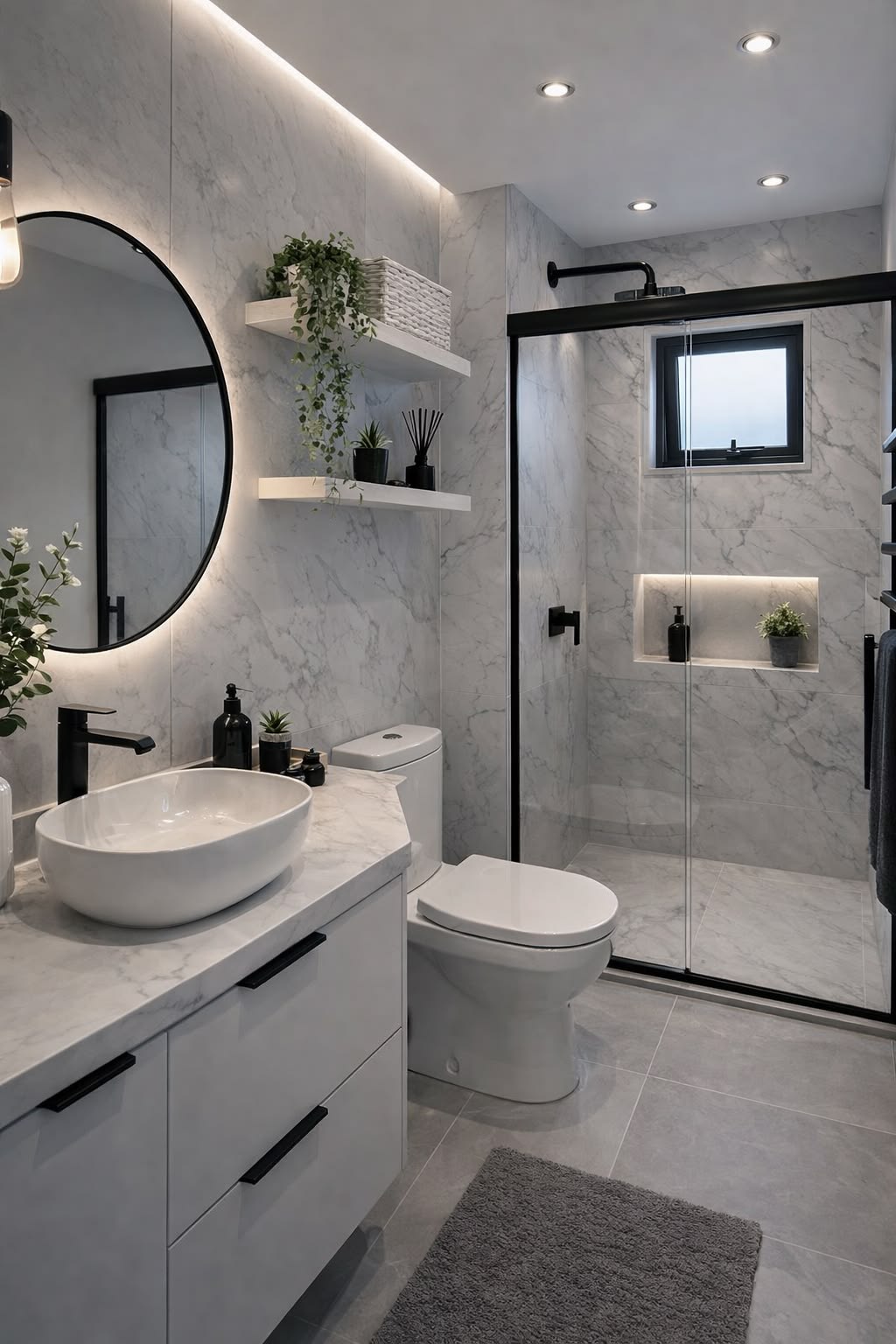
Choose white or beige walls, a wall-mounted vanity, a frameless mirror, and a streamlined shower enclosure. Keep accessories limited to a few functional pieces.
Design tip: Use concealed cabinets and matching dispensers to maintain a tidy, coordinated appearance.
2. Install a Stylish Walk-In Shower
Walk-in showers are among the most practical bathroom upgrades, especially when you want a spacious, contemporary appearance.
A clear glass enclosure allows light to travel throughout the room, helping smaller bathrooms feel less crowded.
Consider rainfall showerheads, recessed shampoo niches, textured wall tiles, and built-in seating where space permits.
For a curbless shower, professional waterproofing, drainage planning, and correct floor slopes are essential.
3. Choose a Floating Bathroom Vanity
Floating vanities create the illusion of additional floor space because they are mounted above the ground.
They work particularly well in small bathrooms and contemporary interiors.
A floating vanity with deep drawers provides storage for towels, toiletries, and grooming essentials while keeping the room visually open.
Choose wood finishes for warmth, white cabinetry for simplicity, or darker colors for a dramatic effect.
4. Design a Luxury Spa-Inspired Bathroom
Transform your bathroom into a peaceful retreat by incorporating features inspired by luxury hotels and wellness spaces.
Use natural materials, warm lighting, soft towels, and simple decorative elements.
A soaking bathtub, spacious shower, wooden vanity, and stone-effect tiles can create a sophisticated atmosphere.
Design tip: Choose dimmable lighting and a calming color palette to make evening routines feel more relaxing.
5. Decorate With Natural Wood Accents
Wood-inspired bathroom designs bring warmth and texture into spaces that otherwise feel cold or overly modern.
Wooden vanities, floating shelves, and decorative accents pair beautifully with white, cream, sage green, and gray.
Use moisture-resistant cabinetry materials or properly sealed wood suitable for humid environments.
Wood-look porcelain tiles are another practical option because they provide a natural appearance without the maintenance requirements of traditional hardwood flooring.
6. Try a Black and White Bathroom Design
Black and white is a timeless combination that works with both traditional and contemporary bathroom interiors.
White subway tiles, black faucets, patterned flooring, and a framed mirror can create an elegant contrast.
For a softer appearance, combine warm white surfaces with charcoal accents instead of using stark black throughout the room.
Keep lighting bright enough to prevent darker elements from making the space feel enclosed.
7. Use Large-Format Bathroom Tiles
Large-format tiles are an excellent choice for creating a clean, seamless appearance.
Because they require fewer grout lines than smaller tiles, they can make bathroom walls look more continuous and reduce the amount of grout that needs cleaning.
Marble-look porcelain, travertine-effect surfaces, and warm beige tiles are attractive options.
For bathroom floors, always check the manufacturer’s slip-resistance suitability, especially in wet areas.
8. Introduce Soft Sage Green Colors
Sage green is a calming color that pairs naturally with wood, cream, white, and brushed metal fixtures.
It works beautifully on painted walls, vanity cabinets, and decorative tiles.
For a subtle design, use sage green on one feature wall and keep the remaining surfaces neutral.
For a richer appearance, combine sage cabinets with natural stone countertops and brushed brass hardware.
9. Make a Statement With a Freestanding Bathtub
A freestanding bathtub can become the focal point of a spacious master bathroom.
Oval and sculptural bathtubs work especially well in modern and transitional interiors.
Position the tub where it has sufficient clearance for cleaning, safe access, and convenient plumbing connections.
Before installation, consider floor structure, the filled tub’s weight, water usage, and available room dimensions.
10. Add a Backlit Bathroom Mirror
An illuminated mirror can enhance both functionality and visual appeal.
Backlit mirrors provide decorative ambient light, while front-lit designs may offer better illumination for grooming.
Pair a mirror with properly positioned wall lights to reduce shadows around the face.
Choose products rated for the intended bathroom location and have electrical fixtures installed according to applicable safety requirements.
11. Create a Small Bathroom With Smart Storage
Small bathrooms benefit from efficient organization rather than excessive decoration.
Use vertical storage to take advantage of otherwise unused wall space.
Practical options include mirrored cabinets, narrow shelving, recessed niches, and drawer dividers.
A vanity with closed storage is particularly useful for keeping toiletries hidden.
Design tip: Select just two or three coordinating finishes to make a compact bathroom feel visually balanced.
12. Use Marble-Look Surfaces for Elegance
Marble-inspired designs create a luxurious appearance without requiring every surface to be made from natural stone.
Porcelain tiles with subtle veining offer a practical alternative for many bathroom applications.
White marble-look tiles pair beautifully with wood cabinetry, brushed nickel faucets, and soft lighting.
For a more dramatic design, use dark veined surfaces on a single feature wall.
13. Experiment With Textured Wall Tiles
Textured wall tiles add visual depth to a bathroom without requiring bold colors.
Fluted, ribbed, handcrafted-look, and three-dimensional tiles can make shower walls or vanity areas more interesting.
Use textured materials selectively to avoid overwhelming a small room.
Consider cleaning requirements before selecting deeply grooved surfaces, especially where soap residue and hard-water deposits accumulate.
14. Design a Scandinavian Bathroom
Scandinavian bathrooms focus on simplicity, natural light, comfort, and functional design.
Common features include pale wood cabinetry, white walls, matte fixtures, and soft neutral accessories.
Add warmth through woven baskets, cotton towels, and subtle textures.
This approach works especially well for homeowners who prefer uncluttered interiors that still feel welcoming.
15. Add Brushed Brass or Gold Fixtures
Warm metallic finishes can instantly elevate a bathroom’s appearance.
Brushed brass faucets, towel bars, cabinet handles, and mirror frames pair beautifully with cream, green, charcoal, and natural wood.
For a cohesive finish, coordinate the most visible hardware without requiring every metal detail to match perfectly.
Avoid introducing too many competing finishes in a small space.
16. Create a Coastal Bathroom Atmosphere
Coastal bathroom designs use colors and textures inspired by beaches and natural landscapes.
Think soft blue, sandy beige, warm white, woven materials, and light-colored wood.
A pale blue vanity with white tiles creates a fresh atmosphere without making the room feel overly themed.
Use subtle accessories instead of filling the space with seashell decorations or nautical ornaments.
17. Install a Double-Sink Vanity
A double vanity can improve convenience in shared bathrooms when adequate space is available.
Separate sinks allow two people to use the bathroom during busy morning routines.
Choose a design with individual drawers or clearly divided storage to keep personal belongings organized.
Before selecting the vanity, measure available wall space, traffic clearance, plumbing locations, and mirror dimensions.
18. Try an Industrial Bathroom Design
Industrial bathrooms combine raw textures with streamlined fixtures.
Concrete-look tiles, charcoal walls, black metal frames, and exposed-style fittings can create an urban aesthetic.
Balance these darker elements with wood or warm lighting so the bathroom doesn’t feel harsh.
A simple rectangular mirror and minimal accessories help maintain the industrial character.
19. Use Patterned Floor Tiles
Patterned flooring is an effective way to introduce personality without changing every surface in the room.
Geometric designs, checkerboard layouts, and vintage-inspired patterns can become attractive focal points.
Pair statement flooring with simple wall tiles and understated cabinetry.
When choosing a pattern, consider how it will look across the actual room dimensions, including cuts around toilets and vanities.
20. Add Built-In Shower Niches
Recessed shower niches offer convenient storage for shampoo, conditioner, and soap.
Unlike hanging organizers, niches can provide a more integrated appearance.
Choose a niche size based on the products you regularly use.
Ensure the niche is properly waterproofed and sloped to drain water rather than collect it.
Matching its tile to the shower walls creates a subtle look, while contrasting tiles make it a decorative feature.
21. Create a Rustic Farmhouse Bathroom
Farmhouse bathrooms combine traditional details with natural materials and comfortable finishes.
Consider a wooden vanity, shaker-style cabinetry, classic subway tiles, and vintage-inspired lighting.
A framed mirror and muted color scheme complete the look.
For a modern farmhouse appearance, avoid excessive distressed finishes and focus on simple, durable materials.
22. Design a Moody Dark Bathroom
Dark bathrooms can feel elegant and dramatic when lighting is thoughtfully planned.
Charcoal, navy, deep green, and dark brown are excellent choices for feature walls or cabinetry.
Add warm metal accents, natural stone textures, or contrasting countertops to provide depth.
Layer task lighting with softer ambient lighting to prevent the room from feeling gloomy.
23. Bring Plants and Natural Elements Into the Bathroom
Plants can soften hard surfaces and add life to bathroom interiors.
Choose species that suit the room’s actual light levels and humidity rather than assuming every plant thrives in a bathroom.
Pothos, certain ferns, and peace lilies may work in suitable conditions, although plant safety around pets should also be considered.
Place plants away from direct water spray and avoid crowding shelves or countertops.
24. Upgrade Bathroom Lighting With Layers
Good bathroom lighting improves daily routines and helps decorative materials look their best.
Combine general ceiling lighting, dedicated mirror lighting, and optional accent lighting.
Wall sconces on either side of a mirror can provide useful face illumination.
Soft lighting under a vanity can create an attractive nighttime effect when appropriately installed.
Choose fixtures suited to damp or wet locations and follow local electrical safety rules.
25. Create a Budget-Friendly Bathroom Makeover
A beautiful bathroom doesn’t always require replacing the shower, flooring, or vanity.
Smaller improvements can refresh an outdated space.
Consider painting suitable surfaces, replacing cabinet hardware, installing a new mirror, adding coordinated accessories, or updating worn sealant.
If existing fixtures function properly, retaining them can significantly reduce remodeling costs.
Prioritize ventilation, leak repairs, and waterproofing issues before spending money on decorative upgrades.
Small Bathroom Design Ideas That Make Spaces Feel Bigger
Limited space doesn’t mean sacrificing comfort or style. Thoughtful layout decisions can make compact bathrooms feel more functional.
Choose Light and Consistent Colors
White, cream, pale gray, and warm beige can create a bright, open atmosphere.
Using similar colors across walls and major fixtures reduces strong visual interruptions.
Add interest through subtle textures rather than excessive patterns.
Install a Clear Glass Shower Screen
A transparent shower screen allows the eye to see more of the room than an opaque curtain or solid partition.
This can make the bathroom feel visually larger.
Choose easy-clean glass if reducing maintenance is a priority.
Use a Large Mirror
Large mirrors help reflect natural and artificial light throughout the space.
A mirror extending across much of the vanity wall can create an impression of additional depth.
Mirrored cabinets offer the added benefit of hidden storage.
Keep Floor Space Visible
Wall-mounted cabinets and compact fixtures can help reduce visual clutter.
However, choose wall-hung toilets and vanities only when the supporting structure and installation requirements allow them.
Best Bathroom Color Combinations
Selecting an attractive color palette can help different bathroom elements feel connected.
| Color Combination | Overall Appearance | Recommended Accents |
|---|---|---|
| White and natural oak | Bright and inviting | Brushed nickel |
| Sage green and cream | Calm and organic | Brass |
| Black and warm white | Modern and elegant | Matte black |
| Beige and terracotta | Warm and earthy | Natural wood |
| Navy and white | Classic and sophisticated | Chrome |
| Charcoal and oak | Contemporary and dramatic | Soft bronze |
| Pale blue and sand | Coastal and relaxing | Light wood |
| Greige and ivory | Understated luxury | Champagne bronze |
For a balanced result, choose one dominant color, one secondary shade, and a small number of accents.
Bathroom Design Ideas on a Budget
You can often achieve noticeable changes by upgrading visible details rather than remodeling everything.
| Upgrade | Cost Level | Potential Impact |
|---|---|---|
| Replace towels and accessories | Low | Refreshes overall appearance |
| Paint suitable walls | Low | Changes the color scheme |
| Replace cabinet handles | Low | Updates existing cabinetry |
| Install a new mirror | Low to medium | Improves visual style |
| Replace light fixtures | Medium | Enhances lighting and atmosphere |
| Refinish an existing vanity | Low to medium | Refreshes the main focal point |
| Replace a faucet | Medium | Updates a prominent fixture |
| Install new flooring | Medium to high | Changes the overall aesthetic |
Actual costs depend on product quality, labor rates, regional pricing, and the condition of the existing bathroom.
For the greatest value, focus first on changes that improve both everyday usability and appearance.
How to Choose the Right Bathroom Layout
The best bathroom layout depends on available floor space, plumbing positions, accessibility requirements, and daily needs.
Small Bathrooms
Compact bathrooms benefit from simple fixture arrangements, appropriately sized vanities, and efficient door clearances.
Corner showers and sliding shower doors can be helpful in certain layouts.
Avoid choosing oversized fixtures that restrict movement.
Medium-Sized Bathrooms
Medium bathrooms may accommodate a larger vanity, enclosed shower, and additional storage.
Plan sufficient space between fixtures so multiple activities can take place comfortably.
Large Master Bathrooms
Spacious bathrooms offer more opportunities for separate bathing and showering areas, double vanities, and dedicated storage.
However, bigger layouts still require thoughtful organization to avoid excessive walking distances between frequently used fixtures.
Bathroom Materials: What Works Best?
Choosing suitable materials is essential because bathrooms experience humidity, water exposure, and frequent cleaning.
| Material | Suitable Application | Main Consideration |
|---|---|---|
| Porcelain tile | Floors, walls, showers | Choose an appropriate slip-resistant finish |
| Ceramic tile | Bathroom walls, selected floors | Check product suitability for its location |
| Natural stone | Floors, vanities, feature walls | May require sealing and specialized care |
| Quartz countertop | Vanity surface | Durable, but not completely heat-proof |
| Moisture-resistant cabinetry | Bathroom vanities | Still needs protection from prolonged water exposure |
| Tempered safety glass | Shower enclosures | Requires correct hardware and installation |
| Solid-surface material | Counters and shower components | Offers a relatively seamless appearance |
Remember that tile itself is not a complete waterproofing system. Showers and other wet areas need correctly installed waterproofing assemblies behind or beneath their finished surfaces.
Common Bathroom Design Mistakes to Avoid
Even attractive design choices can become inconvenient if practical details are overlooked.
Poor ventilation: Inadequate moisture removal can contribute to condensation, peeling finishes, and mold growth. Use appropriately sized ventilation and maintain it regularly.
Insufficient storage: A beautiful vanity with no useful drawers may lead to cluttered countertops.
Inappropriate flooring: Smooth materials that become slippery when wet can create unnecessary safety risks.
Poor lighting: Relying on one overhead fixture can produce unflattering shadows and make grooming difficult.
Ignoring clearances: Fixtures should not interfere with doors, walkways, or comfortable use.
Overspending on decorative finishes: Waterproofing, drainage, ventilation, and reliable plumbing should take priority.
Following trends too closely: Use permanent materials you can comfortably live with for years, and introduce more experimental styles through replaceable accessories.
Bathroom Design Trends for 2026
Bathroom design in 2026 emphasizes relaxing interiors, natural materials, practical storage, and accessible layouts.
Recent industry research highlights several prominent directions: warm neutral palettes, sage and olive green, wood-faced vanities, larger showers, layered lighting, and features that support long-term usability.
Homeowners are also placing greater emphasis on organization and comfortable daily routines rather than purely decorative luxury.
These trends can inspire a remodel, but timeless materials and functional layouts generally offer greater flexibility than highly specialized design choices.
Frequently Asked Questions About Bathroom Design Ideas
What Is the Most Popular Bathroom Design Style?
Modern, transitional, and natural-inspired bathroom designs are widely favored. They typically combine neutral colors, functional storage, simple fixtures, and warm materials.
How Can I Make My Bathroom Look Expensive?
Use coordinated finishes, attractive lighting, a well-proportioned mirror, uncluttered countertops, and high-quality-looking materials. Subtle details often create a more sophisticated effect than excessive decoration.
What Colors Make a Small Bathroom Look Bigger?
White, cream, pale gray, light beige, and other soft colors can help small bathrooms appear brighter and more open, particularly when combined with good lighting.
Are Walk-In Showers Better Than Bathtubs?
Walk-in showers can improve accessibility and make efficient use of space. Bathtubs remain useful for bathing children, soaking, or personal relaxation. The better option depends on household needs and available room.
What Is the Best Flooring for a Bathroom?
Porcelain tile is a versatile choice because it resists moisture and comes in many styles. Select flooring specifically rated for bathroom use and suitable for wet-foot traffic.
How Can I Decorate a Bathroom Without Renovating?
Replace towels, rugs, mirrors, accessories, cabinet handles, and suitable light fixtures. Painting walls and organizing storage can also create a noticeable transformation.
What Makes a Bathroom Feel Luxurious?
Spacious layouts, layered lighting, comfortable showers, organized storage, quality materials, and cohesive finishes all contribute to a luxurious feeling.
How Do I Choose Bathroom Tiles?
Consider slip resistance, water exposure, cleaning requirements, tile size, grout maintenance, and compatibility with the overall design. Wall and floor tiles are not always interchangeable.
Should Bathroom Fixtures All Match?
Matching fixtures can create a cohesive appearance, but carefully combining two complementary finishes can also work well. Consistency matters more than making every detail identical.
How Much Should I Budget for Bathroom Remodeling?
Bathroom remodeling costs vary considerably based on room size, fixture quality, labor, plumbing changes, and regional pricing. Establish a detailed budget, obtain professional quotes, and reserve a contingency for unexpected repairs.
Conclusion
The best bathroom design ideas combine visual appeal with comfort, organization, and long-term practicality. Whether you prefer modern minimalism, a relaxing spa atmosphere, classic farmhouse details, or bold contemporary finishes, thoughtful choices can make your bathroom more enjoyable every day.
Start by considering your available space, household needs, and budget. Then choose a coordinated color palette, durable materials, efficient storage, and appropriate lighting.
Even small changes can make a meaningful difference. With careful planning and attention to detail, you can create a bathroom that feels beautiful, welcoming, and functional for years to come.
See another version