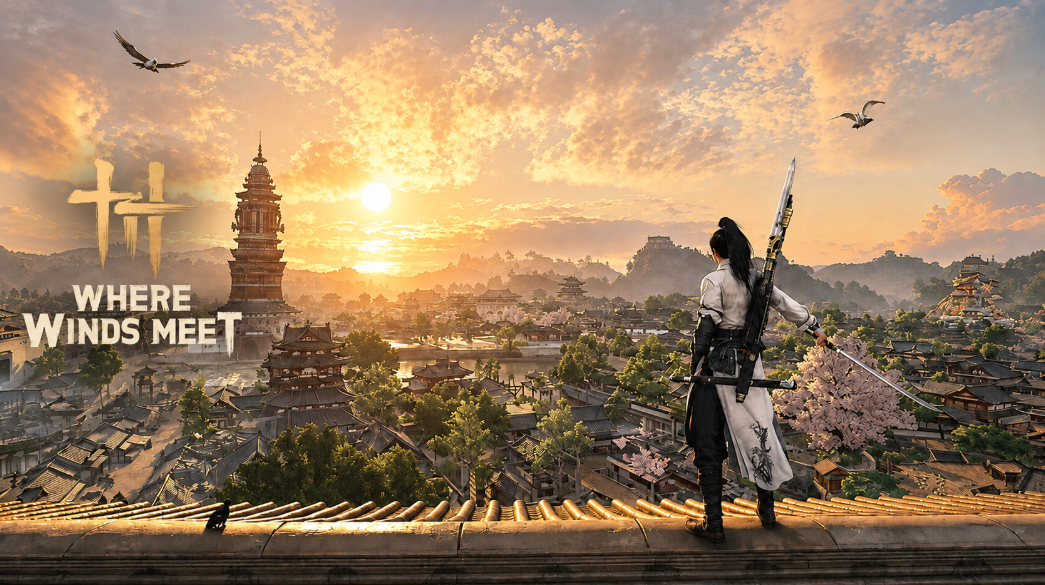
Have you seen the name Everstone Studio pop up in gaming discords lately? Chances are, it was next to screenshots of misty mountains, rooftop parkour, or players talking about throwing a bear into a rock. That last part isn’t a joke, by the way. So, who exactly is Everstone Studio? And why has this once little-known developer suddenly become one of the most talked-about names in gaming?
In this guide, we’ll break it all down. First, we’ll cover who Everstone Studio is. Then, we’ll look at what they’ve built, how their game has performed, and what makes them different from the usual free-to-play crowd.
What Is Everstone Studio?
Everstone Studio is a video game development studio based in Hangzhou, China. It operates under NetEase (Hangzhou) Network Co., Ltd. In fact, it’s a game development studio under NetEase, and its core work is the open-world wuxia action-adventure RPG Where Winds Meet.




The studio isn’t a household name yet, at least not in the way Naughty Dog or CD Projekt Red are. But that’s partly by design. So far, Everstone Studio has largely let its work speak for itself. For example, the project that put them on the map began development back in November 2019. After that, the team spent years quietly building the game before it became a global talking point.
Quick Facts Table
| Detail | Information |
|---|---|
| Studio name | Everstone Studio |
| Headquarters | Hangzhou, China |
| Parent company | NetEase Games |
| Flagship title | Where Winds Meet |
| Genre focus | Wuxia, open-world action-RPG |
| Notable release | Global launch: November 14, 2025 |
| Engine used | Messiah Engine |
| Development team size | 300+ people |
The Studio’s Flagship Game: Where Winds Meet
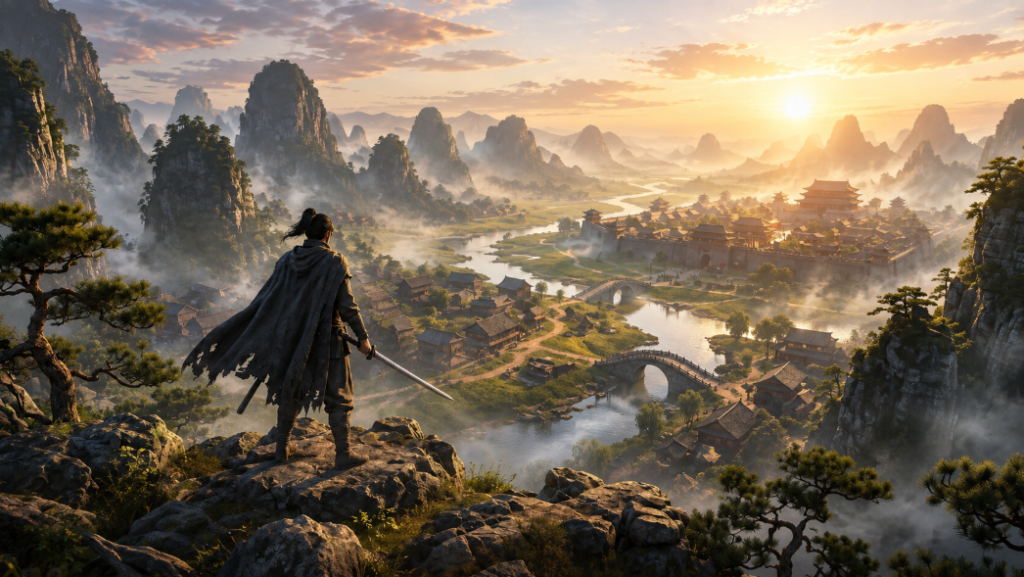
So far, Everstone Studio’s reputation rests almost entirely on one title. That title is Where Winds Meet, a free-to-play, open-world action RPG set in China’s Five Dynasties and Ten Kingdoms period. Essentially, it’s built around wuxia, which is a fictional martial-arts genre centered on honor, rebellion, and flowing combat. On top of that, it blends single-player storytelling with near-MMO features like guilds, co-op, and PvP duels.
Setting and Story
To begin with, the game drops players into a turbulent period of Chinese history. It’s a true living world, filled with branching stories, side quests, and choices that carry weight. Basically, you play a wanderer caught up in factional conflict. And the world reacts to how you engage with it. Even small dialogue choices in minor towns can shift outcomes later on.
Combat and Movement
This is where the studio has earned the most praise. Specifically, the combat system is built around 12 martial arts styles and dozens of “Mystic Arts” techniques. As a result, players get a genuinely deep toolkit, rather than a single combo string dressed up in different skins. Notably, Everstone brought in award-winning fight choreographer Stephen Tung Wai to help design the martial arts. That expertise clearly shows in how the animations move.
Meanwhile, traversal is just as central to the experience. For instance, players can scale rooftops with fluid parkour, cover huge distances almost instantly using a windstride mechanic, or use fast travel points to jump between regions. Additionally, weapon variety adds another layer. You can master traditional weapons like the sword, spear, Mo blade, and rope dart. Or, if you prefer something less conventional, you can try an umbrella or a fan.
Multiplayer and Social Features
Even though the campaign holds up on its own, Where Winds Meet isn’t a pure single-player game. Instead, you can team up with up to four friends for co-op. Alternatively, you can join or create a guild for group activities, like guild wars and multiplayer dungeons and raids. Or, you can step into a shared world with thousands of other players and test yourself in competitive duels.
Is Where Winds Meet Pay-to-Win?
This is probably the single most-asked question about the game, and it’s a fair one. After all, free-to-play open-world RPGs have a rough reputation for aggressive monetization. However, based on multiple independent reviews, the answer appears to be no.
- First, the game uses a cosmetic-only monetization strategy and has explicitly avoided a pay-to-win model.
- Additionally, there’s no pay-to-win mechanic. Most cosmetics are reasonably priced, and the game hands out a large number of them just through completing achievements and activities.
- Similarly, one reviewer noted the monetization systems felt well balanced. In fact, they never felt pressured to spend real money during their playthrough.
That said, some reviewers flagged the in-game economy as confusing at times. So, “generous” doesn’t necessarily mean “simple.” Instead, expect a learning curve around currencies and progression systems.
How Big Is Where Winds Meet?
The scale of the project is one of the main reasons Everstone Studio jumped from unknown to notable so quickly.
- To start, development involved a team of more than 300 people and a budget exceeding $84 million.
- Furthermore, by the game’s Q4 2025 financial report window, its global user base had reportedly surpassed 80 million players.
- On top of that, the map spans more than 20 square kilometers and offers over 150 hours of open-world content, spread across single-player and multiplayer modes.
- Within about 14 months, the game generated roughly $115 million in revenue against its investment. That works out to an estimated 1.5x return.
Overall, those are big numbers for a studio that wasn’t widely known outside China before 2025. Still, it’s worth being upfront here. Exact revenue and ROI figures from any live-service game are estimates pulled from financial disclosures and third-party analysis. They aren’t audited public data. So, treat them as directional rather than exact.
Platforms and Release Timeline
Where Winds Meet didn’t launch everywhere at once. Instead, it rolled out in phases:
| Platform | Release Date |
|---|---|
| PC (China, open beta) | December 27, 2024 |
| Mobile (China) | January 9, 2025 |
| PC & PlayStation 5 (Global) | November 14, 2025 |
| Android & iOS (Global) | December 12, 2025 |
| Xbox Series X/S | June 7, 2026 |
Also, the game is playable through cloud services. This means it can run across different devices without needing top-tier local hardware.
People can also read this: Monster Hunter Wilds Update What’s New in 2026
What Reviewers Are Saying
Overall, reception has been largely positive. However, most criticism is aimed at polish rather than core design. Here are the common themes across reviews:
Strengths reviewers highlight:
- Deep, responsive combat that borrows smart ideas from genre leaders without feeling derivative
- A genuinely dense open world, where side content usually has a story or lore payoff instead of filler
- A large amount of meaningful content, even at launch, which is unusual for a free-to-play title
- Strong art direction, environmental variety, and a photo mode reviewers compare favorably to other big-budget open-world games
Weaknesses reviewers mention:
- Some rough edges in overall polish
- A currency and economy system that can feel confusing early on
- Story delivered somewhat piecemeal at launch, though more narrative content has been promised over time
Everstone Studio vs. Other Wuxia/Open-World Developers
It’s easy to lump Everstone Studio in with the general wave of Chinese-developed open-world games. However, a few things set their approach apart:
- Genre focus: Instead of copying a Western open-world template, the studio leaned fully into wuxia as a genre. This includes full weapon variety, parkour-driven traversal, and a historical Chinese setting rarely explored at this scale.
- Monetization philosophy: Committing publicly to no pay-to-win mechanics is a notable stance. After all, gacha and power-based monetization are common in this market.
- Hybrid structure: Blending a real single-player campaign with MMO-adjacent systems, like guilds, raids, and open-world PvP, is a harder balance to strike than most studios attempt. Yet, by most accounts, they landed it reasonably well on their first major global release.
Final Thoughts
In under two years, Everstone Studio went from a relatively unknown NetEase subsidiary to one of the more talked-about developers in the open-world RPG space. And they did it with one very ambitious game, rather than a string of smaller releases. Of course, Where Winds Meet isn’t flawless. The economy system and story pacing have drawn fair criticism. Even so, the combat, world design, and fair monetization have earned it a loyal and growing player base. So, if the studio keeps building on this foundation, Everstone Studio is definitely worth keeping on your radar for whatever comes next.
FAQs
What is Everstone Studio known for?
Everstone Studio is best known as the developer of Where Winds Meet. It’s a wuxia-themed open-world action RPG, published by NetEase Games.
Is Everstone Studio owned by NetEase?
Yes. Specifically, Everstone Studio operates as a studio under NetEase (Hangzhou) Network Co., Ltd.
Is Where Winds Meet free to play?
Yes, it is. It’s available across PC, PlayStation 5, Xbox Series X/S, Android, and iOS, using a cosmetic-only monetization model.
Does Everstone Studio have other games besides Where Winds Meet?
As of now, Where Winds Meet is the studio’s primary and most publicly known release. So far, there’s no confirmed second title from the studio.
Is Where Winds Meet pay-to-win?
No, it isn’t. Multiple reviewers confirm the monetization is cosmetic-only, with no mechanics that give paying players a combat advantage.
When did Where Winds Meet release on Xbox?
The Xbox Series X/S version launched on June 7, 2026. This came after earlier releases on PC, PlayStation 5, and mobile.
For more updates visit: GAME TYPES