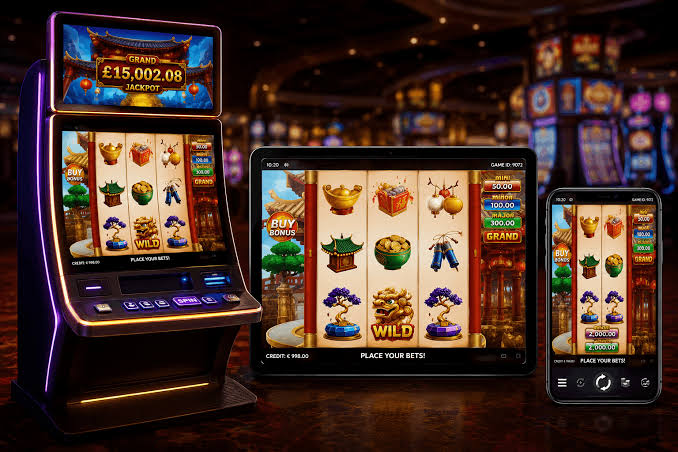
Both real-money online casinos and free-play platforms can offer many of the same digital casino games. Slots, blackjack, roulette, and other familiar formats may use similar graphics, rules, and layouts across both versions. At first glance, the experience can look almost identical.
The difference really shows in how each platform works behind the scenes. A free-play game may share the same graphics, rules, and layout as its real-money version, while the account setup works very differently. Looking at how each format handles money, verification, location, virtual credits, and game features helps explain where those differences begin.
Real Money Platforms Handle Actual Funds
Real-money online casinos allow eligible players to deposit funds, place wagers, and withdraw eligible balances through supported payment methods. Because real money is involved, these platforms generally require identity checks, account verification and location confirmation before certain features become available. Payment processing also follows rules set by the operator and the state where the service is licensed.



FanDuel Casino real money operates within this type of regulated environment in states where online casino play is permitted. For example, eligible players can use actual funds on slot games such as Hansel & Gretel Candyhouse, which FanDuel lists with wagers starting at $0.10. FanDuel also offers Live Dealer Lightning Roulette, where listed wagers start at $0.20 and can go up to $10,000 depending on the table.
Account Verification Follows Real Money Use
Since real-money platforms handle deposits and withdrawals, they usually require more detailed account checks than free-play services. Players may need to confirm their identity, age, and other personal details before accessing certain account functions. These checks can also apply before a withdrawal is processed or when additional verification is needed.
The verification process can vary by platform and state requirements. Some free-play games may only require basic registration, while others can be accessed without creating a full account. Real-money services generally require more information because the account is linked to actual funds. Once those details are confirmed, the platform may also need to verify the player’s physical location.
Location Checks Control Real Money Access
State laws make location a key factor in accessing real-money online casinos. Platforms may use device location, Wi-Fi signals, and other tools to confirm that a player is physically within an approved state. Even a verified account can be restricted when the device is outside the permitted area. Real-money games may become unavailable once a player crosses a state boundary. These checks can occur when a player signs in or attempts to access a real-money game.
Free-play games usually face fewer location restrictions since they do not involve actual funds. A demo version of a slot or table game may remain available even when its real-money version is restricted. Some platforms may still impose regional limits due to legal or business requirements. In many cases, these limits are less strict than the location controls used for real-money access.
Free Play Relies On Virtual Credits
Free-play platforms generally use virtual coins, tokens, or demo credits instead of actual funds. These balances allow players to explore games such as slots, blackjack, or roulette without making a real deposit. The amount shown on screen may rise or fall during play, but those credits normally cannot be withdrawn as cash. Real-money accounts use actual deposited funds and can credit eligible payouts back to the account balance.
Recent attention around dual-currency casino models has made this difference more noticeable. Some platforms use one currency for free play and another that may be linked to redeemable prizes. States have increasingly examined how those systems fit within existing online casino rules. Standard demo credits, by comparison, are usually limited to use within the platform.
Game Features Change With Account Type
The type of account can also affect which game features are available. Real-money and free-play versions may share similar graphics, rules, and layouts, but the features surrounding the game can differ. Real-money versions can include cash balances, wager limits, payment tools, and withdrawal options. Some live dealer tables or game settings may also require a funded and verified account.
Free-play versions usually replace those functions with virtual balances and simplified account tools. For example, a demo slot may use practice credits rather than drawing from a real-money balance. A free-play blackjack table may also allow players to test the basic rules without requiring deposits or withdrawals. Some live dealer options and account-based tools may not be available in the free version.
Same Games, Very Different Playing Fields
Real-money and free-play platforms may look similar, but several key differences separate how they operate. First, real-money platforms use actual funds, while free-play platforms rely on virtual credits.
Second, real-money accounts generally require more detailed identity verification. Location checks are another difference, since access to real-money casino games can depend on state laws. Finally, account type can affect available features, including wager limits, live dealer options, and withdrawal functions.