Dead Cells is a fast-paced action game that combines challenging combat, exploration, platforming, and roguelite progression. Since its release, the game has built a strong following among players who enjoy difficult gameplay and rewarding discovery. Its responsive controls and constantly changing runs make every attempt feel different.
Developed by Motion Twin and later supported by Evil Empire, Dead Cells takes players through a mysterious island filled with dangerous enemies, hidden paths, powerful weapons, and difficult bosses. The game encourages experimentation because each run can introduce different equipment and routes.
What makes Dead Cells stand out is the way it blends classic action-platforming with modern roguelite mechanics. Defeat an enemy, explore a new area, collect useful equipment, and push further into the island. When a run ends, players can use their experience to improve future attempts.




What Is Dead Cells?
Dead Cells is a roguelite action-platformer known for its challenging combat and procedurally generated environments. Players control the Prisoner, a mysterious character capable of taking control of a strange humanoid body.
The story is discovered gradually through exploration rather than lengthy explanations. As players travel across the island, they encounter unusual characters, environmental clues, enemies, and areas that reveal more about the game’s world.
The main objective is to survive increasingly difficult areas while improving your character’s abilities and equipment. Every run provides opportunities to discover new weapons, upgrades, blueprints, and routes.
How Dead Cells Gameplay Works
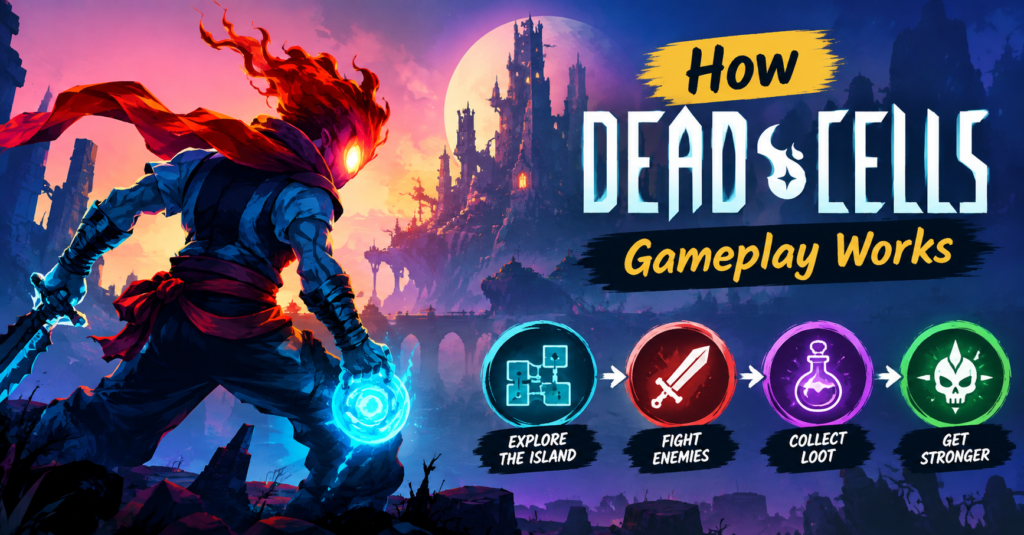
The core gameplay of Dead Cells focuses on movement, combat, exploration, and decision-making. Players can attack enemies with melee weapons, use ranged equipment, deploy traps, and activate powerful skills.
Movement is equally important. Enemies can deal significant damage, so learning when to attack, dodge, jump, and retreat is essential. Fast reactions can turn a difficult encounter into a successful one.
Each run follows a different path through the island. Some areas may contain valuable rewards, while others present tougher enemies or challenging platforming sections. Choosing where to go becomes an important part of the experience.
Dead Cells Combat System
Combat is one of the biggest strengths of Dead Cells. Weapons have different attack patterns, ranges, speeds, and effects, allowing players to develop different approaches to encounters.
A fast weapon can be useful when players want to attack quickly and stay mobile. Heavier weapons may deal more damage but require better timing. Ranged weapons provide another option, while shields can reward players who learn to block or parry incoming attacks.
The game also allows equipment to work together. Certain weapons and skills can create useful combinations, encouraging players to experiment instead of relying on one permanent strategy.
Weapons, Skills and Builds
Dead Cells offers a wide variety of equipment. Swords, bows, shields, traps, grenades, and other abilities can dramatically change how a run plays.
The game’s colour-based equipment system also influences character builds. Different items can benefit different playstyles, so choosing equipment that works well together can make later areas easier.
Players should avoid focusing only on the highest damage number. A weapon with useful effects or strong synergy with another ability can sometimes be more effective than a powerful item used alone.
Progression and Unlocking New Content
Progression in Dead Cells is designed to make repeated runs meaningful. Even when a player fails to reach the end of a run, collected resources can contribute to future progress.
Blueprints allow players to unlock additional weapons and equipment. Cells collected during runs can be used to improve the available item pool, giving future attempts more variety.
Permanent abilities can also open new routes and areas. This creates a strong sense of progression because returning to the island after a failed run can provide completely new possibilities.
Exploring the Island
Exploration plays an important role in Dead Cells. Levels contain secret areas, alternate routes, rewards, and environmental details that encourage players to look beyond the obvious path.
The procedural structure means that layouts change between runs, but the game still provides recognizable locations and progression routes. Learning the characteristics of each biome becomes increasingly useful.
Exploration can also reveal shortcuts and special areas. Experienced players eventually learn how to move through familiar sections more efficiently while searching for the best opportunities.
Bosses and Difficulty
Dead Cells is designed to be challenging, but its difficulty is closely connected to learning. Boss encounters require players to understand attack patterns, movement opportunities, and the right moments to deal damage.
Early failures are a natural part of the experience. Instead of treating every unsuccessful run as wasted time, players can use each attempt to learn enemy behaviour and improve their decision-making.
The game also offers additional difficulty through its progression system. As players become more skilled, tougher challenges provide new goals and test their understanding of the combat system.
Dead Cells DLC and Additional Content
Dead Cells received substantial additional content after its original release. Expansions introduced new environments, weapons, enemies, bosses, and story elements.
One of the best-known expansions is The Bad Seed, which added new early-game areas and additional gameplay options. Fatal Falls expanded the middle portion of the adventure with new locations and encounters.
The Queen and the Sea provided further endgame content, including new areas and a different conclusion to the main journey. These expansions helped keep Dead Cells fresh for returning players.
Why Dead Cells Remains Popular
Dead Cells continues to attract players because its fundamental gameplay is easy to understand but difficult to master. The controls feel responsive, combat rewards practice, and each run offers enough variety to encourage another attempt.
The combination of roguelite progression and action-platforming also gives the game a distinct identity. Players who enjoy games where skill improves alongside character progression can find plenty of depth here.
Its visual style, atmospheric environments, energetic combat, and large equipment selection further strengthen the experience. The result is a game that can be enjoyed casually while also offering considerable depth to dedicated players.
Dead Cells for Beginners
New players should focus on learning rather than trying to complete the entire game immediately. Understanding enemy attacks and becoming comfortable with movement can make a bigger difference than simply collecting powerful equipment.
Dodging is especially important because avoiding damage often creates better opportunities than attacking continuously. Players should also pay attention to equipment combinations and choose items that complement their preferred playstyle.
Exploration should not be rushed. Taking time to understand each biome can help players discover useful resources, hidden routes, and safer ways to approach difficult encounters.
Conclusion
Dead Cells remains an impressive example of how roguelite mechanics can work with fast-paced action-platforming. Its challenging combat, changing environments, extensive equipment system, and meaningful progression give every run a clear purpose.
Whether you are discovering the island for the first time or returning to master higher difficulty levels, Dead Cells offers plenty of reasons to keep playing. Its focus on skill, experimentation, and discovery makes it a standout choice for fans of demanding action games.
FAQs
Is Dead Cells a roguelike or roguelite?
Dead Cells is generally described as a roguelite because it combines repeated runs and changing environments with permanent progression. Players can unlock equipment and abilities that remain available across future attempts.
What type of game is Dead Cells?
Dead Cells is an action-platformer with roguelite elements. It combines fast combat, exploration, procedural level generation, character progression, and challenging boss encounters.
Is Dead Cells difficult?
Yes, Dead Cells can be challenging, especially for new players. However, its difficulty is strongly connected to learning enemy patterns, improving movement, and understanding how different weapons and abilities work together.
Can beginners enjoy Dead Cells?
Yes. Beginners may struggle during their first few runs, but the game is designed around gradual improvement. Each attempt can teach players something useful about combat, exploration, and progression.
Does Dead Cells have different weapons?
Yes. Dead Cells features many different weapons and abilities, including melee weapons, ranged equipment, shields, traps, and other skills. Their differences allow players to create varied builds.
Does Dead Cells have DLC?
Yes. Dead Cells received several major expansions, including The Bad Seed, Fatal Falls, and The Queen and the Sea. These additions introduced new locations, equipment, enemies, and other content.
For more updates visit: GAME TYPES