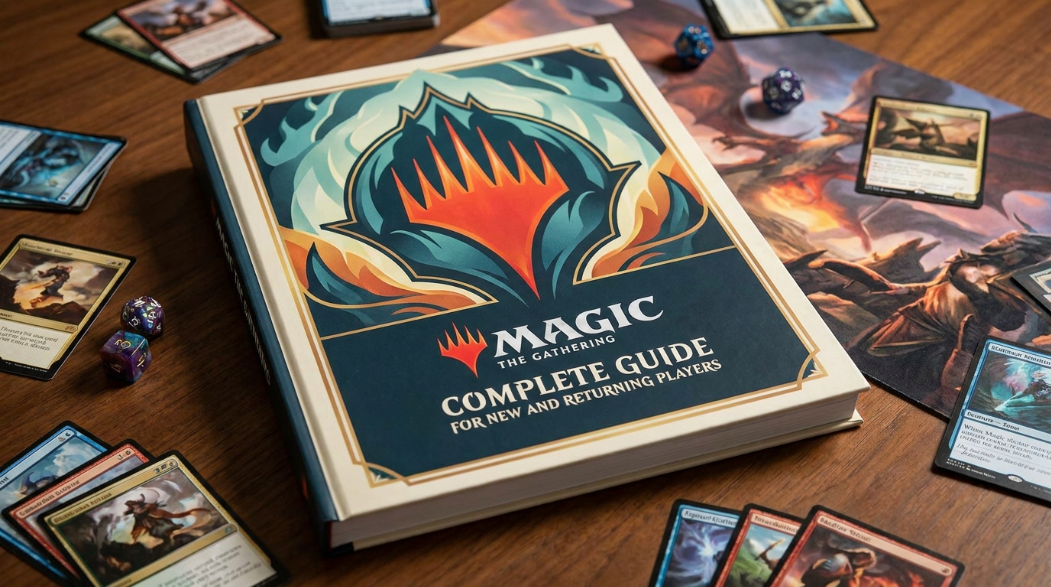
Magic the Gathering is one of the most popular trading card games in the world. It combines strategy, fantasy, deck building and competitive play in a way that gives every game a different experience. Players use cards to cast spells, summon creatures and defeat their opponents through careful planning.
For beginners in the UK, Magic the Gathering can seem complicated at first because the game has many cards, formats and rules. However, the basic idea is easy to understand once you learn how turns work and what the main card types do.
Whether you are completely new to MTG or returning after several years, this guide explains the essentials in a simple way. You will learn how the game works, what cards you need, how decks are built and which formats you can explore.




What Is Magic the Gathering?
Magic the Gathering, commonly called Magic or MTG, is a strategy-based trading card game created by Richard Garfield. Players take the role of powerful spellcasters known as planeswalkers and use cards to battle each other.
A typical game involves two players, although some formats support larger groups. Each player brings a deck containing spells, creatures, lands and other cards. The goal is usually to reduce your opponent’s life total to zero while protecting your own strategy.
One of the biggest strengths of Magic the Gathering is its variety. There are thousands of cards, and players can combine them in many different ways. This means two decks can approach the same game very differently.
How Does Magic the Gathering Work?
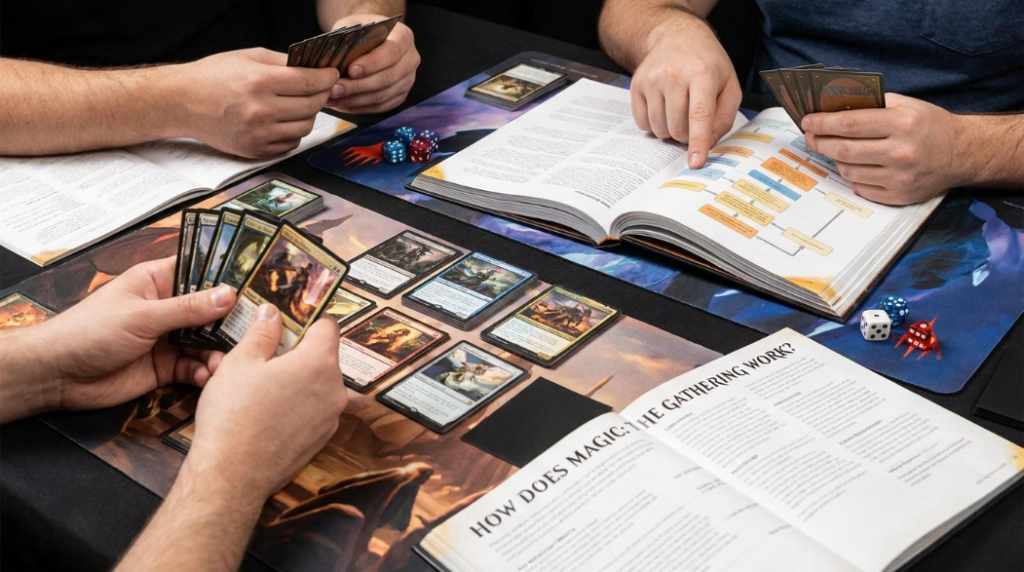
At the beginning of a game, players draw cards from their decks and prepare their battlefield. Lands are normally used to produce mana, which is the resource needed to cast most spells.
During a turn, a player can play a land and use available mana to cast cards. Creatures can attack opponents, while other spells can remove threats, draw cards, create effects or change the situation on the battlefield.
Players take turns until one side meets a winning condition. Although the basic rules are straightforward, MTG becomes more strategic as players learn timing, card advantage, resource management and interactions between different cards.
Understanding the Main Card Types
Learning the major card types is one of the easiest ways to understand Magic the Gathering. Each type has a different role during a game.
Lands
Lands are the primary source of mana. Most decks need lands because they allow players to cast their spells. Basic lands include Plains, Island, Swamp, Mountain and Forest.
Different colours of mana support different styles of play. For example, blue often focuses on knowledge and control, while red commonly represents speed and direct damage.
Creatures
Creatures are permanent cards that can usually attack and defend. They are an important part of many MTG decks.
Creatures have power and toughness. Power represents the damage they can deal in combat, while toughness represents how much damage they can generally withstand before being destroyed.
Instants and Sorceries
Instants and sorceries are spells that create temporary effects. They can deal damage, destroy cards, draw cards, counter spells or provide many other effects.
The main difference is timing. Instants can generally be played during a wider range of moments, while sorceries are normally restricted to the player’s own main phases.
Enchantments and Artifacts
Enchantments create ongoing effects and can influence the battlefield for several turns. Artifacts are another type of permanent and often provide useful abilities, equipment or other advantages.
These cards can become important parts of a deck’s overall strategy.
Planeswalkers
Planeswalkers are powerful permanent cards with abilities that can influence the game. They can provide advantages over multiple turns if an opponent does not deal with them.
They also add another strategic layer because opponents must decide whether to attack the planeswalker or continue attacking the player.
The Five Colours of Magic
Magic the Gathering is built around five main colours: white, blue, black, red and green. Each colour has its own identity and preferred strategies.
White often focuses on organisation, protection, creatures and teamwork. Blue is associated with card drawing, countering spells and controlling the game. Black commonly uses removal, graveyard interactions and powerful effects that may involve life or other resources.
Red often focuses on speed, direct damage and aggressive creatures. Green is known for large creatures, mana acceleration and strong connections with nature.
Many decks combine two or more colours to create more complex strategies. Learning what each colour does can help beginners decide what type of deck they would enjoy playing.
Popular Magic the Gathering Formats
One reason MTG remains popular is the number of ways to play it. Different formats use different rules for deck construction and card availability.
Standard
Standard is designed around a changing selection of newer card sets. This gives the format a regularly evolving environment and encourages players to adapt their decks.
Commander
Commander is especially popular for casual multiplayer games. Players normally use a larger deck built around a legendary creature or another eligible commander.
The format encourages creativity and social gameplay, making it a popular starting point for players who prefer playing with friends.
Modern and Other Formats
Modern and other constructed formats allow players to use broader selections of cards. These formats can support powerful and highly developed strategies.
Limited formats such as Draft and Sealed work differently. Instead of bringing a completed deck, players build one from a restricted pool of cards opened during the event.
Building Your First MTG Deck
Building a Magic the Gathering deck is one of the most enjoyable parts of the game. Beginners should start with a clear strategy rather than trying to include every interesting card.
Think about what you want your deck to do. You might want to attack quickly with creatures, control the opponent’s spells or build towards a powerful late-game strategy.
A good deck also needs enough mana and a sensible balance between different types of cards. As you play more games, you will learn which cards perform well together and which cards do not contribute enough to your main plan.
Why Magic the Gathering Is Still Popular
Magic the Gathering has remained successful because it combines collecting with deep strategy. A new set can introduce fresh mechanics, characters and cards while also changing how existing decks are played.
The game also works for different types of players. Someone may enjoy relaxed games with friends, while another player may prefer tournaments and highly competitive events.
Digital versions of the game have also made it easier for players to experience MTG without always needing a physical collection.
Tips for New Magic Players
New players should focus on learning the fundamentals instead of trying to memorise every rule immediately. Understanding mana, card advantage, combat and turn structure will make the game much easier.
It is also useful to play several games with the same beginner-friendly deck. Repeated games help you understand how your cards interact and when to use important abilities.
Do not worry about losing. Magic the Gathering has a significant learning curve, and mistakes are part of improving. Each game can teach you something about your deck and your opponent’s strategy.
Is Magic the Gathering Good for Beginners?
Magic the Gathering can be a great choice for beginners who enjoy strategy and fantasy card games. The huge card pool may look overwhelming, but players do not need to understand everything before starting.
Starting with a simple deck or beginner-focused product can make the learning process easier. Once the basic rules become familiar, players can explore different colours, formats and deck strategies.
The best approach is to learn gradually and play regularly. MTG becomes much easier when the basic game actions become familiar.
Conclusion
Magic the Gathering is much more than a traditional card game. It combines strategy, deck building, fantasy and social competition into a constantly changing experience. From learning how lands produce mana to building a specialised deck, there is always something new to discover.
For beginners in the UK, the best way to start is to keep things simple. Learn the main card types, understand the five colours and play a few games with an easy-to-use deck. As your knowledge grows, you can explore Commander, Standard, Limited and other formats.
Whether you enjoy casual games or competitive strategy, Magic the Gathering offers a huge amount of variety. That combination is a major reason why MTG continues to attract new players and longtime fans.
FAQs
What is Magic the Gathering?
Magic the Gathering is a trading card game based on strategy, spells, creatures and deck building. Players use their cards to compete against each other and normally try to reduce an opponent’s life total to zero.
Is Magic the Gathering difficult to learn?
Magic the Gathering has many rules, but the basic gameplay is manageable for beginners. Learning the main card types, mana system and turn structure provides a strong foundation.
How many cards are needed to play Magic the Gathering?
The number of cards required depends on the format. Many constructed formats use decks with a minimum of 60 cards, while Commander normally uses a 100-card deck including the commander.
What are the five colours in Magic the Gathering?
The five colours are white, blue, black, red and green. Each colour has different strengths, mechanics and strategies, allowing players to create many different types of decks.
Is Magic the Gathering popular in the UK?
Yes. Magic the Gathering has an established player community in the UK, with casual groups, local game stores and organised events providing different ways to play.
What is the best Magic the Gathering format for beginners?
Commander can be appealing for beginners who want casual multiplayer games, while other formats may be better for players interested in competitive or rotating environments. The best choice depends on how you prefer to play.
For more updates visit: GAME TYPES