

Gametypes help players understand what a game is about. Some games focus on action and speed. Others focus on stories, sports, puzzles, or strategy. Because there are so many choices today, knowing different gametypes can make finding a new game much easier.
The gaming world has changed a lot over the years. Today, games can mix several styles in one title. For example, one game may have action combat, role-playing features, and a large open world.
In this guide, you will learn about the main gametypes. You will also see what makes each type special and why players enjoy it.
What Are Gametypes?
Gametypes are categories that describe how a game works. They can show what players do, how they reach their goals, and what kind of experience they can expect.
For example, action games often need quick reactions. In contrast, strategy games need careful planning. RPGs focus on characters and progress, while simulation games try to copy real-life activities.
However, game types do not always stay separate. Many modern games mix two or more styles. As a result, one game can fit into several gametypes at the same time.
Action Games
Action games are among the most popular gametypes. They often focus on quick movement, combat, and fast decisions. Players may need to fight enemies, avoid danger, or complete tasks under pressure.
Some action games focus on shooting. Others use sword fights, hand-to-hand combat, or platforming. In addition, many action games add puzzles and story elements.
Overall, action games are a good choice for players who enjoy fast and exciting gameplay.
Platform Games
Platform games focus on movement and jumping. Players often need to cross levels, avoid traps, and reach a final goal.
Some platform games use simple 2D graphics. Others use large 3D worlds. Either way, timing is often very important.
Moreover, platform games can be easy to start but hard to master. This makes them fun for both new and experienced players.
Role-Playing Games
Role-playing games are also known as RPGs. These games let players control characters and improve them over time.
Most RPGs include levels, skills, weapons, items, quests, and character upgrades. Players may also make choices that affect the story.
In addition, RPGs often have large worlds to explore. Players can meet different characters, complete missions, and discover new areas.
Because of these features, RPGs are popular with players who enjoy long games and deep stories.
Action RPGs
Action RPGs combine RPG systems with real-time combat. Players control movement and attacks directly instead of waiting for turns.
For example, players may dodge attacks, use special skills, and change weapons during a fight. At the same time, they can still level up their characters and find better equipment.
Therefore, action RPGs offer a mix of fast combat and character progress.
Adventure Games
Adventure games focus on exploration, stories, puzzles, and characters. Instead of constant combat, players often spend time exploring areas and finding clues.
Some adventure games also include dialogue choices. These choices can change how a story develops.
Furthermore, adventure games can create a slower and more relaxed experience. They are a good choice for players who enjoy stories, mysteries, and exploration.
Strategy Games
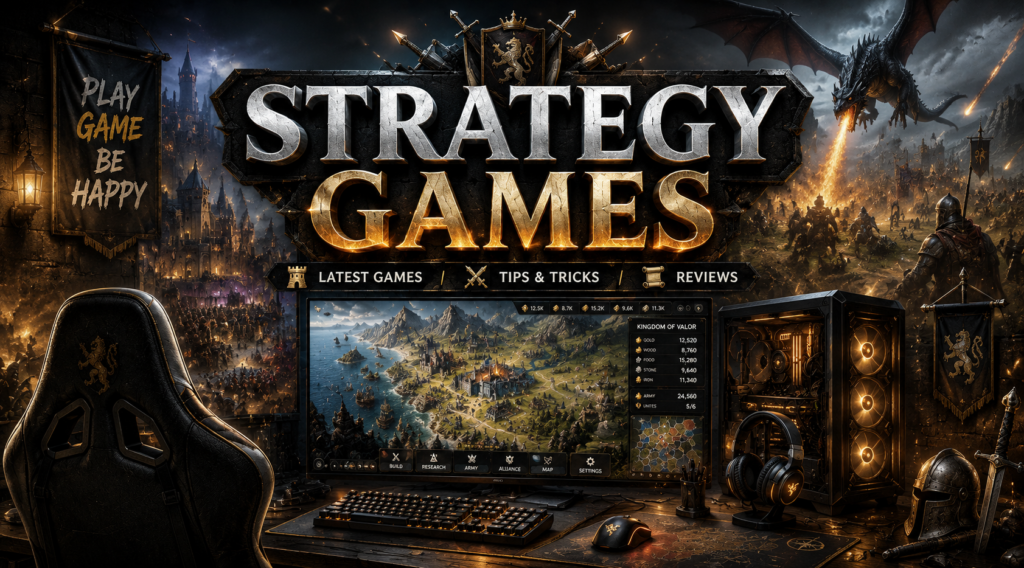
Strategy games are built around planning and smart decisions. Players may control armies, cities, countries, or entire groups.
Unlike many action games, strategy games do not always depend on fast reactions. Instead, players need to think about their next move.
For example, they may collect resources, build structures, or plan an attack. At the same time, they must watch what their opponents are doing.
Real-Time Strategy
Real-time strategy games continue while players make decisions. There are no long breaks between turns.
Players may collect resources, build bases, train units, and attack enemies. Because everything happens at once, players need to act quickly.
As a result, real-time strategy games can feel fast and competitive.
Turn-Based Strategy
Turn-based strategy games give players more time to think. Each player takes a turn before the game moves forward.
This system works well for players who enjoy careful planning. They can study the situation and consider different choices before making a move.
Therefore, turn-based games often reward patience and smart decisions.
Simulation Games
Simulation games try to copy real-world activities. These activities can include driving, farming, flying, building, or running a business.
Some simulation games focus on realism. Others keep things simple and fun.
For example, a driving simulator may try to copy real driving rules. On the other hand, a farming game may make farming easier so players can enjoy the experience.
Because of this, simulation games can appeal to many different types of players.
Sports Games
Sports games bring real-world sports into video games. Popular examples include football, cricket, basketball, tennis, golf, and racing.
Players can often control individual athletes or complete teams. Many games also include career modes and online matches.
In addition, sports games can be great for both casual and competitive players. You can play a quick match or spend hours building a team.
Racing Games
Racing games focus on speed, vehicles, tracks, and competition. Players can race cars, bikes, boats, and other vehicles.
Some racing games aim for realism. They may include detailed vehicle controls and realistic tracks.
Other racing games take a more relaxed approach. They may use simple controls, unusual tracks, and fun driving features.
As a result, racing games can suit players who want either realistic driving or fast arcade action.
Fighting Games
Fighting games focus on direct combat between characters. Matches are often one-on-one, although some games support teams.
Each character may have different attacks and special abilities. Players must learn when to attack, block, move, and defend.
Moreover, fighting games often reward practice. Learning a character can take time, but better skills can lead to better results.
Horror Games
Horror games aim to create fear and tension. They often use dark places, strange sounds, mystery, and unexpected events.
Some horror games focus on survival. Others focus more on solving a mystery or discovering what happened.
In many cases, players must explore dangerous areas while managing limited resources. This can make even simple tasks feel tense.
Therefore, horror games are a strong choice for players who enjoy suspense and mystery.
Puzzle Games
Puzzle games challenge players to solve problems. They may use logic, patterns, memory, numbers, or observation.
Some puzzles are simple and take only a few minutes. Others can be very challenging and may require several attempts.
Puzzle games also appear inside other gametypes. For example, an adventure game may use puzzles to unlock new areas.
As a result, puzzle mechanics are useful in many types of games.
Sandbox Games
Sandbox games give players a high level of freedom. Instead of following one fixed path, players can choose what they want to do.
They may build structures, explore the world, create items, or complete different activities.
For this reason, sandbox games are popular with creative players. They can offer a lot of freedom without forcing players to follow one style of play.
Open-World Games
Open-world games give players large areas to explore. Players can often travel between locations without following a strict path.
These worlds may include missions, side activities, characters, secrets, and hidden locations.
However, an open-world game is not always a sandbox game. An open-world title can offer a large map while still giving players a set story and clear goals.
Still, both gametypes often work well together.
Multiplayer Games
Multiplayer games allow two or more players to play together. Players can compete against each other or work as a team.
Online multiplayer has become a major part of modern gaming. Players can join matches, complete missions, race against others, or explore shared worlds.
Also, multiplayer features can appear in almost every major gametype. RPGs, sports games, shooters, racing games, and strategy games can all support multiplayer play.
Cooperative Games
Cooperative games, often called co-op games, ask players to work together. The main goal is usually shared rather than individual.
Players may need to communicate and combine their skills. For example, one player may focus on defence while another handles attacks.
Therefore, co-op games can be especially enjoyable when played with friends.
Battle Royale Games
Battle royale games combine survival, exploration, and competition. Players usually enter a large map and compete until one player or team remains.
At the start, players often search for useful equipment. Then, they move around the map while trying to survive.
Many battle royale games also use a shrinking play area. This forces players closer together as the match continues.
Because each match can play out differently, battle royale games can offer a fresh experience each time.
Casual Games
Casual games are usually easy to understand. They often have simple controls and short play sessions.
Mobile games, puzzle games, card games, and arcade titles can all be casual games.
However, casual does not always mean easy. Some casual games become very challenging as players move to higher levels.
Therefore, casual gametypes can work well for both new players and people who want a quick gaming session.
Why Gametypes Matter
Gametypes help players choose games that match their interests. For example, players who love stories may prefer RPGs or adventure games.
On the other hand, players who enjoy competition may prefer fighting, racing, sports, or multiplayer games.
Similarly, creative players may enjoy sandbox and simulation games. Players who like planning may prefer strategy games.
Most importantly, there is no need to choose only one gametype. Trying different styles can help you discover new games and new ways to play.
How Modern Games Combine Gametypes
Modern games often combine several gametypes. This approach gives players more ways to enjoy one game.
For example, a game can combine RPG systems with action combat and an open-world map. Another game may mix simulation, strategy, and multiplayer features.
Because of these combinations, it can sometimes be difficult to place a game in one category.
Still, the main gametype usually tells you what kind of experience the game offers. The other features simply add more variety.
How to Choose the Right Gametype
Choosing the right gametype depends on what you enjoy. If you like stories and characters, RPGs and adventure games may be a good choice.
If you prefer fast gameplay, action and fighting games may suit you better. Meanwhile, racing and sports games are useful for players who enjoy competition.
For creative players, sandbox games can offer more freedom. In contrast, strategy and puzzle games are better for people who enjoy solving problems and planning ahead.
Finally, you can try several gametypes before deciding which ones you like most. Gaming is about having fun, so your personal preference matters most.
Conclusion
Gametypes make it easier to understand the wide world of gaming. Action, RPG, adventure, strategy, simulation, sports, racing, horror, puzzle, sandbox, and multiplayer games all offer different experiences.
However, modern games do not always follow one category. Many titles combine several gametypes to create a unique style of play.
Therefore, learning about different gametypes can help you find games that match your interests. Whether you enjoy fast action, deep stories, careful planning, creative freedom, or online competition, there is a game type for you.
FAQs
What does gametypes mean?
Gametypes are categories used to describe different styles of games. They can explain how a game works, what players do, and what type of experience the game offers.
What are the most popular gametypes?
Some of the most popular gametypes include action, RPG, adventure, strategy, sports, racing, simulation, horror, puzzle, and multiplayer games. However, popularity can change over time.
Can one game have multiple gametypes?
Yes, a game can have more than one gametype. In fact, many modern games combine different styles. For example, an RPG may also be an action and open-world game.
What is the difference between a game type and a game genre?
The terms game type and game genre are often used in the same way. Both can describe the main style or gameplay system of a game.
Which gametype is best for beginners?
There is no single best gametype for everyone. However, casual, puzzle, sports, and adventure games can be good starting points because their basic controls are often easy to learn.
Which gametype focuses most on stories?
RPG and adventure games often focus strongly on stories. They may include characters, dialogue, quests, exploration, and important player choices.
Which gametypes are competitive?
Fighting, racing, sports, strategy, and multiplayer games can all be competitive. Each one uses different skills, such as timing, teamwork, planning, or quick reactions.
What are multiplayer gametypes?
Multiplayer gametypes allow several players to take part in the same game. Players can compete against each other or work together to complete shared goals.
Are sandbox and open-world games the same?
No. Open-world games usually offer a large area to explore. Sandbox games give players more freedom to create, experiment, and choose how they want to play. However, both types can overlap.
Why are gametypes important?
Gametypes help players understand what to expect from a game. They also make it easier to find new games based on personal interests, such as action, stories, strategy, creativity, or competition.
For more updates visit: GAME TYPES